
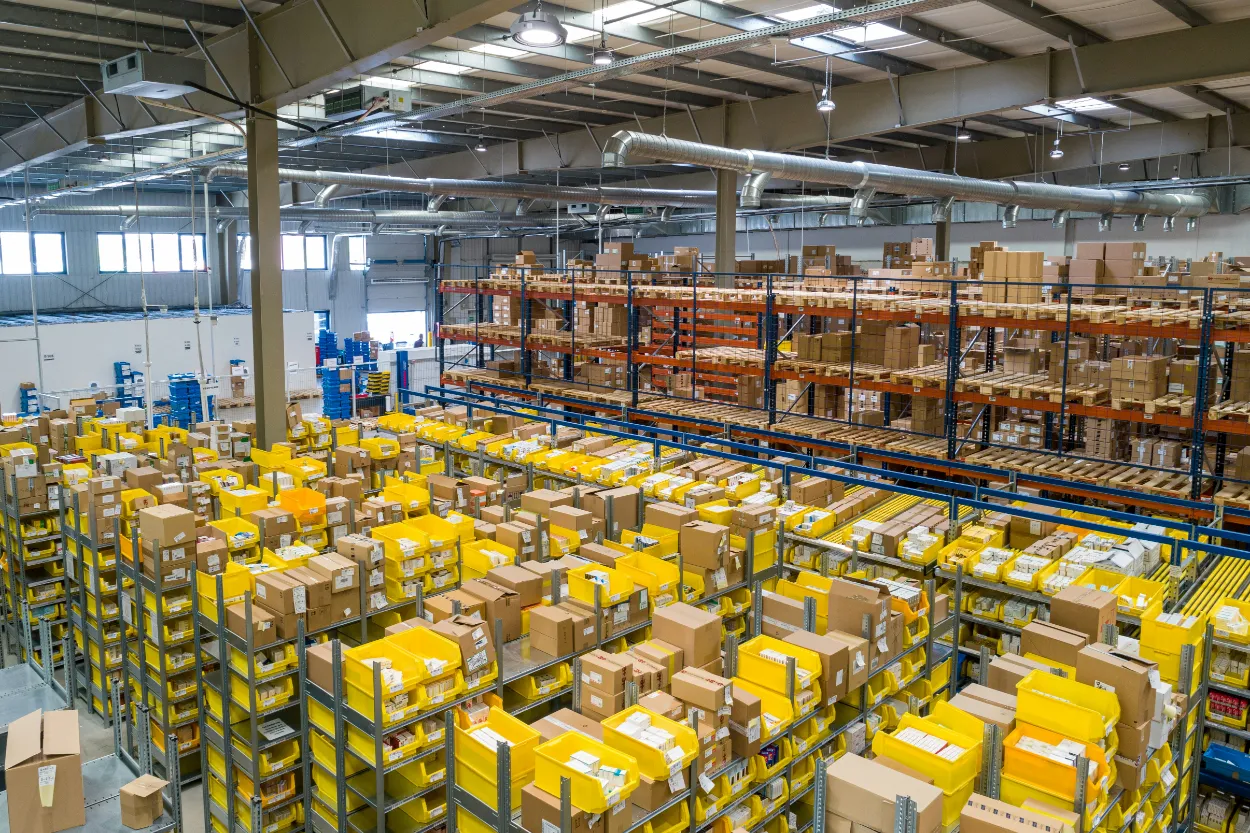
When space starts to run out, most warehouse and facilities managers face the same difficult question:
Do we move… or do we adapt what we already have?
Relocation is often the first option discussed, but it is rarely the simplest. In contrast, mezzanine floors are increasingly being recognised as a smarter, faster route to expansion, especially for businesses looking to grow without disrupting operations.
This blog explores both options honestly, relocation vs mezzanine floors, to help you understand which delivers the fastest return on investment, the least disruption, and the greatest long-term flexibility.
Whether you manage a warehouse, mixed-use facility, or industrial unit with office space attached, limited space affects more than storage:
The challenge isn’t just about more room; it’s about utilising your space better.
That’s where the decision between relocation and installing a mezzanine floor becomes critical.
Relocating to a larger premises can sound appealing. A fresh layout, more square footage, and the chance to redesign from scratch. But the hidden costs often outweigh the benefits.
Relocation typically involves:
Even when well-managed, relocation can take 6–12 months before operations stabilise.
For growing businesses, that delay can stall momentum.
A mezzanine floor creates usable space within your existing building by making use of vertical height. Instead of expanding your footprint, you unlock square metres you already own.
For many many, mezzanines offer a faster, lower-risk alternative to moving.
Installing a mezzanine floor is typically far more cost-effective than relocation. There’s no need for new leases, moving logistics, or full building refits.
In many cases, businesses can double their usable space at a fraction of the cost of moving.
One of the biggest advantages of mezzanine floors is continuity.
Most mezzanine installations can be completed:
This means productivity continues, and revenue doesn’t pause.
Compared to relocation timelines, mezzanine floors are fast.
From design to installation, many projects are completed within weeks rather than months, meaning:
One of the biggest misconceptions about mezzanine floors is they’re incredibly versatile.
For warehouses:
When paired with systems such as double deep pallet racking or selective racking, mezzanines can dramatically improve space efficiency.
For facilities with admin or management teams on-site, mezzanines are ideal for:
This separation improves focus, safety, and communication, without requiring a separate building.
Another major lesson warehouse managers have learned in recent years is that flexibility matters more than forecasts.
Relocation locks you into:
Mezzanine floors, on the other hand, are:
That flexibility is a huge part of why mezzanines offer better long-term value.

A common concern is regulation, and rightly so.
Mezzanine floors must meet UK building regulations, including:
At Dalvie Systems, compliance is built into every stage of design and installation. We ensure mezzanine floors integrate safely with:
Done properly, mezzanines don’t compromise safety, they often improve it by reducing congestion at ground level.
To be clear, relocation isn’t always the wrong choice.
It may be the better option if:
However, in our experience, many businesses assume relocation is necessary before fully exploring mezzanine options.
If space constraints slowed your operations this year, now is the time to act, not when pressure peaks again.
A mezzanine floor can be:
At Dalvie Systems, we help warehouse managers and facilities teams assess their space honestly and design solutions that work for people, processes, and performance.
Speak to our friendly team about mezzanine floors for storage or office use, and find out whether building up could give you a faster payback than moving.
