
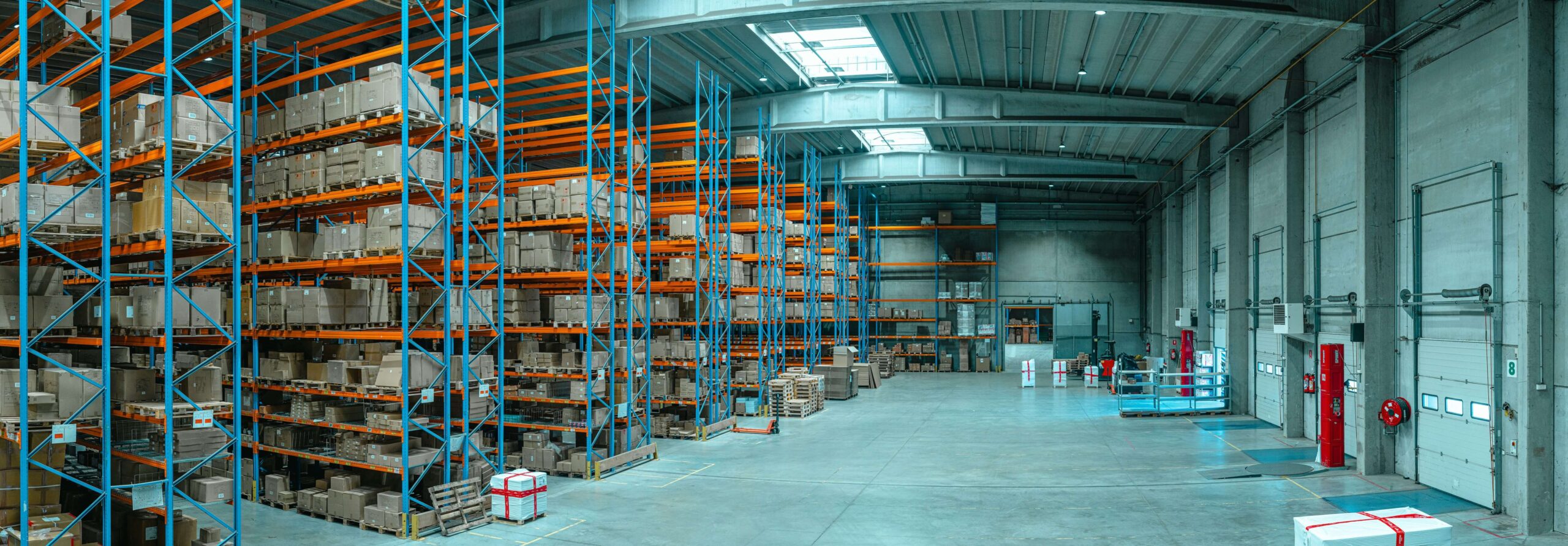
For many businesses across the UK, September marks the unofficial starting line for the busiest quarter of the year. Whether you operate in retail distribution, ecommerce or manufacturing, the final three months – often driven by peak shopping events like Black Friday and the Christmas rush – will test your warehouse storage capacity, pallet racking layout and despatch speed in ways the rest of the year simply doesn’t.
Most Q4 planning focuses on stock levels: how much to buy, when it needs to land, and where the budget stretches to. That’s the right instinct, but it only covers half the problem. Fewer operations plan for what actually slows a warehouse down once volume climbs, picking paths that were perfectly fine in spring, a returns queue nobody budgeted floor space for, and a despatch area that copes comfortably with normal volume but buckles the moment it’s asked to handle double.
The businesses that come through Q4 looking calm aren’t the ones with the biggest warehouses. They’re the ones who spent September asking hard questions about how their existing space actually performs under pressure, then fixed the answers before the pressure arrived rather than during it.
Here are four checks worth running before peak hits.
During peak periods, picking speed is everything. If your highest-demand items are stored at the back of the warehouse or on upper pallet levels requiring constant, complex manoeuvring, your fulfilment times will plummet just as customer expectations peak alongside them. It’s a pattern that catches out otherwise well-run operations every year: the layout that worked when order volumes were steady starts working against the team the moment volumes spike.
The knock-on effects compound quickly. A picker who has to walk further and lift more awkwardly for your best-selling lines isn’t just slower on that one pick; they’re slower on every pick that day, and that adds up across a team working extended peak-season hours.
The Fix: Review your picking data from earlier in the year and identify your genuine A-items – the lines that account for the bulk of your order volume, not just the ones that feel busiest. Move those fast-moving lines to ground-level or easily accessible low-bay racking near your dispatch area to slash travel times. B and C-items, which move less often, can safely sit further out or higher up. This single reshuffle, done properly, is often the highest-return change you can make in the whole warehouse before peak, and it costs nothing but the labour to do it.
Peak trading brings a peak in returns, and it typically arrives a few weeks after the sales spike – once gifted items are unwrapped, unwanted lines come back, and Christmas exchanges start rolling in through January. It’s the part of peak season planning that gets skipped most often, precisely because it doesn’t hit until the sales rush already feels like it’s over and everyone’s guard is down.
If that returned stock has nowhere designated to go, it ends up blocking aisles, staging areas or whatever floor space happens to be free that day – exactly the space your pickers and despatch team need clear for outbound orders that are still going out. A returns backlog in the wrong part of the warehouse doesn’t just slow down processing of the returns themselves; it actively strangles the outbound operation working around it.
The Fix: Before peak starts, mark out and budget floor space specifically for returns processing, kept separate from your outbound staging area. Even a temporary bay with clear floor marking stops returned stock creeping into the space your operation actually needs. Decide now who owns returns processing during peak and how quickly stock needs to be graded and put away, rather than working it out in real time when the first wave lands.
A fast pick is only half the job if the loading bay backs up behind it. Despatch and staging areas are usually sized for average daily volume, not for the surge that hits once peak orders start landing on top of business as usual. It’s one of the most common bottlenecks in a peak-ready warehouse, and one of the least visible until it’s actually happening, because everything upstream of despatch can be performing perfectly while the whole operation still grinds to a halt at the loading bay doors.
The Fix: Walk your despatch area and time how long a full run of outbound pallets actually takes to clear on a normal week. Then ask honestly whether that holds at double the volume, with more couriers on site and more staff moving through the same physical space. If the answer is no, that’s the bottleneck to fix now, while there’s still time to reconfigure the space, add staging capacity or adjust courier collection windows, rather than firefighting it in November when there’s no slack left to work with.
Most operations bring in temporary or agency staff for peak, and a warehouse that makes perfect sense to your permanent team can be genuinely confusing to someone on their first shift. The cost of that confusion isn’t abstract, it shows up directly in slower picking, more mis-picks, and more time spent by your experienced staff answering questions instead of working their own lines.
The Fix: Before peak starts, walk the floor as if you’d never seen it before. Are aisles and zones labelled clearly enough that a new starter can find a pick location without asking? Is the pick path logical, or does it assume knowledge only your longest-serving team members actually have? A short, structured induction combined with a genuinely intuitive layout will get temporary staff to full productivity in days rather than weeks – which, across a whole peak-season intake, is time you don’t get back.
The best time to review your warehouse layout was six months ago; the second best time is right now. Addressing minor inefficiencies today – in picking, in returns space, in despatch capacity, in how quickly new hands get up to speed – prevents major fulfilment delays tomorrow, when there’s far less room to manoeuvre and far more riding on getting it right.
Need help reviewing your storage capacity or floor space ahead of Q4? Get in touch with the team at Dalvie Systems today to see how we can help your operations run smoothly all winter.
